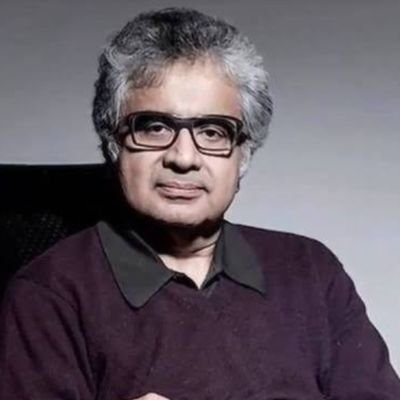
New Delhi, Oct 12 (IANS) Former Solicitor General and renowned lawyer Harish Salve has criticised the Opposition’s attempts to meet the Chief Justice of India (CJI), questioning its moves to approach the judiciary and the ongoing protests against Chief Election Commissioner, Gyanesh Kumar.
In an interview with IANS, Salve described the move as “sheer stupidity” and alleged that the Supreme Court was being used as a political tool.
He discussed the relationship between the judiciary and political parties, the right to protest, the role of constitutional institutions, the Opposition’s criticism of the judiciary and allegations of foreign funding behind protests. Salve also stressed that constitutional rights must be exercised within the framework of the law.
Here is the full interview:
IANS: The CJI has refused to meet Rahul Gandhi and the INDIA bloc leaders. How do you view this development?
Harish Salve: Initially, I thought the news that the leaders had sought an appointment was fake. But now, people from the Bar and Bench have tweeted that they had sought an appointment, and the Chief Justice refused to meet them. There are so many senior lawyers in their party. Did nobody tell them that the Chief Justice does not personally hear every case? The Bench to which the Chief Justice assigns a matter hears it and delivers the judgment. Something new is happening in our country. I do not understand what is going on.
IANS: Is the INDIA bloc’s decision to take out a march and attempt to meet the CJI in this manner a strategy to exert pressure?
Harish Salve: This is sheer stupidity. It appears as though they are proceeding on the assumption that they have no faith in the Constitution or any system and that they will do whatever they want.
If you want to abide by the Constitution and talk about the red book of the Constitution they carry, you cannot make political demands of this nature before the judiciary. There are certain limits, and there is a prescribed procedure in court that must be followed. They have filed a petition. This is not the first time they have faced such a situation. I do not understand why they are doing this.
IANS: Do you think the Supreme Court is being used as a political tool?
Harish Salve: Absolutely. In my opinion, they are trying to use the Supreme Court as a political tool every day. They talk about human rights. In the previous hearing, the court said that you are claiming that this will happen and that will not happen, but you are not appearing before the court on behalf of the protesters. This is politics. The judges are doing their job. Issues such as human rights, the right to protest and freedom of expression under Article 19 are involved here. The judges are examining all these aspects.
Even today, the court has passed a very balanced order. It has merely said that nothing should be done illegally. This needed to be said because petitions of this nature are being filed continuously. The Supreme Court has also said that the government’s response should be proportionate to the circumstances. I have been practising law for more than 45 years. I have never before seen this kind of thinking, in which people seek to meet the Chief Justice in this manner.
IANS: The CJI has reportedly said that people’s faith in the judiciary is eroding. How do you view this statement?
Harish Salve: Earlier, there were certain unwritten rules that we followed as a matter of discipline. When we were junior lawyers, from the time of Mr Palkhivala, we were taught that one should not comment publicly on a case one is arguing in court. This was so that, whether the judgment went in your favour or against you, you would not make it a matter of personal comment. Now, it appears that these traditions are not being followed because all these cases have become political. The lawyers are political leaders, and they bring cases to court. When they do not get the order they want, they say that they have lost faith in the judiciary.
This is a very unfortunate development for India’s future. You cannot say that if the court does not deliver a judgment of your choice, you will lose faith in the judiciary. If a judgment went against the government and the Prime Minister said that he had lost faith in the judiciary, everyone would say that he was putting the Constitution and the country in danger. But when the Opposition says this, the question arises: what has happened to its faith in the judiciary? I do not understand what is happening in our country.
IANS: If Kapil Sibal has lost faith in the judiciary, should he continue practising in the Supreme Court?
Harish Salve: Kapil Sibal is a senior lawyer. If he has lost faith in the judiciary, he should advise his clients accordingly. If I had no faith in the judiciary, I would not appear in court myself. You appear before a court, seek a judgment from a judge, and when the judge does not agree with you, you say that you have lost faith. We were taught that such comments should not be made. Faith in the judiciary and the correctness of a particular judgment are two different things. You can say that you found a Supreme Court judgment disappointing or that, in your view, it was wrong. You can put forward your arguments. There can be differences of opinion, and judges can also make mistakes.
There is a famous English saying: “They are not final because they are right, but they are right because they are final.” A Supreme Court judgment is final, even if someone considers it wrong. But saying that you have lost faith in the judiciary carries a different meaning. It suggests that the judiciary is deliberately delivering wrong judgments. If that is not what someone means, they should clarify that they are merely disappointed with a particular judgment.
IANS: You have served as the Solicitor General of India. Can a political leader submit a memorandum to the CJI demanding the removal of the Chief Election Commissioner?
Harish Salve: This is precisely what I am saying, strange things are happening in our country. An enormous controversy has been created on the basis of a newspaper report, even though a case is due to come up before the court in about 10 days. The Election Commission will file its response and present its records. The Supreme Court will examine whether any irregularity took place and, if it did, how it was addressed.
Is it necessary to create a commotion every day? Is it necessary to inconvenience the people of Delhi? The festive season is approaching. Shopkeepers are worried that protests could affect their businesses. While engaging in politics, we must also consider the convenience and comfort of the public. My opinion on this matter is very clear. The Supreme Court has sought a response from the Chief Election Commissioner, and the court will deliver its decisions in due course.
If it is established that decisions were taken for personal reasons, or if the court makes any observations about the CEC, the appropriate constitutional procedure can be followed. Where applicable, a motion for impeachment may also be considered. The Supreme Court cannot directly remove the CEC from office. The validity of the CEC’s decisions and the procedures followed by him have been challenged. All these issues will be examined. There is no need to draw conclusions in haste. This is politics.
IANS: The Congress has been continuously questioning the Election Commission and the judiciary. Do you think the standard of politics is declining?
Harish Salve: I am old-fashioned in these matters, and I am deeply concerned about the situation.
There is one government in India today, and there will be other governments in the future. The Congress was in power earlier, and it may come to power again in the future. The people will decide through elections who governs. But we must not weaken the institutional framework of governance or allow public faith in institutions to erode. If you win an election and form a government in a state, you would not want people to take to the streets and say that the government is not being allowed to function according to the Constitution. You will feel they are not letting you govern as per the Constitution, and you are doing that with the Union cabinet
We must not weaken or target our institutions. The Constitution has established separate institutions, including the judiciary, the legislature, the elected executive and the Election Commission. Each has its own jurisdiction, and the courts maintain a system of checks and balances.
If you start saying that only you are right and that anyone who disagrees with you has compromised their position or is politically motivated, genuine exchanges of ideas come to an end. This is like the thinking that says, “My truth and your truth”. If you agree with me, you are good; if you disagree, you are bad. Democracy cannot function this way.
IANS: The Supreme Court held a special hearing on Sunday and provided relief to protesters and ordinary citizens. Why are people still unhappy despite this?
Harish Salve: They wanted to embarrass the government. They wanted the Supreme Court to remove all barricades and allow people to enter Delhi and indulge in arson. That was never going to happen, and it did not happen. The Supreme Court passed a very carefully considered and balanced order. It said that restrictions imposed beyond what was necessary should be removed. The rest of the matter was left to the government.
The main point is that the right to protest is subject to the applicable police laws. It does not exist outside the law. If the police refuse permission, that decision can be challenged through the appropriate legal process. You can approach the court and seek an order. But you cannot decide on your own that the police decision is wrong, break the restrictions and proceed regardless, and then, when you are stopped, claim that your right to protest has been violated. The Supreme Court has made it clear that the right to protest does not place anyone above the law.
IANS: The Congress has a large legal team and several senior lawyers. Despite this, how appropriate is it to adopt such a strategy?
Harish Salve: This question should be put to Congress leaders. From a legal perspective, I am surprised that a party with such extensive legal expertise is choosing this course of action. Are they acting on the advice of their lawyers, or against their advice? Only they can answer that.
IANS: In which direction is India’s legal system heading at present?
Harish Salve: For the first time, the government has taken a clear and firm position that it will not allow such activities to continue unchecked. The government also has a responsibility to protect institutions when someone insults them or attempts to weaken them.
People talk about exercising their constitutional right to protest, but at the same time, they question the very constitutional system that protects their rights. They want rights but do not want to accept the responsibilities that accompany them. The Constitution gives you the right to protest, but it also places upon you the responsibility to respect institutions and follow the law. You cannot abuse the Chief Election Commissioner or Parliament, call upon people to take to the streets, and then, when restrictions are imposed on your protest, speak only about your rights.
I do not understand their thinking. In my opinion, this is a political movement aimed at destabilising the government; it is the government’s responsibility to confront it firmly. I believe it should continue to do so.
IANS: Do you think attempts are being made to create a situation in India similar to those in Nepal and Bangladesh in the name of the right to protest?
Harish Salve: I believe that foreign funding is being provided for these efforts and that they are being instigated from abroad. This is my allegation. Some foreign countries, particularly the United States, are not happy with India. Our Finance Minister has also spoken about negotiations on free trade agreements with various countries, including Canada. When she was asked about the United States, the gist of the response was that India should learn to deal with such pressures.
Is there any doubt about who was behind the turmoil in Nepal, Sri Lanka and Bangladesh? Who removed Sheikh Hasina, and who brought in the new Prime Minister there? In my opinion, external forces were behind these events.
In India, too, some people have emerged as leaders of protests, including some YouTubers, Dipke and Saurav Das. Some people live in Germany and other countries. Where are they getting the money for these activities? Organising protests requires funding. I have no doubt that a clear pattern has emerged over the past six to eight months. While the Modi government is focusing on dealing with the Strait of Hormuz crisis, economic development, technological progress and enhancing India’s satellite capabilities, these groups are trying to prevent the government from moving forward.
I have observed this pattern over the past six to eight months. It is the government’s responsibility to deal with such movements. I do not think this movement will last very long because, in my opinion, it is not a genuine people’s movement.
IANS: Should the government investigate and take legal action against those who are allegedly receiving foreign funding and promoting a particular narrative in the country?
Harish Salve: I am fully confident that an investigation will be initiated. However, I do not consider this a people’s movement.
I don’t live in India, and based on what I have seen, I do not see a widespread public uprising. Just look at the student movement. When examination papers were leaked, people understood how hard students work to prepare for their examinations and how unfair it is to them when question papers are leaked. Those students received public support.
But the kind of movement and attacks on the police that we have witnessed do not necessarily reflect genuine public support for the students.
People understand what is happening. Today, narratives are being spread through YouTube videos, reels and one-line messages. Claims are being repeated again and again, which I consider false. I recently watched an interview with the Delhi Police public relations team in which these claims were addressed. In my view, it demonstrated how certain narratives can be misleading.
–IANS
rs/dpb