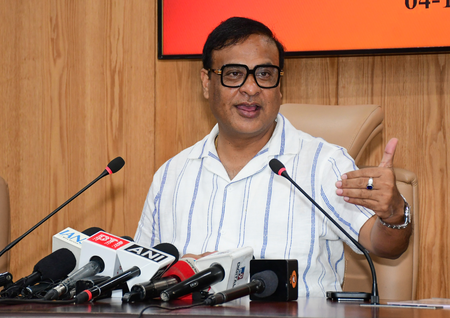
Guwahati, Oct 6 (IANS) Assam is continuing to expand its cancer care infrastructure beyond major urban centres, with new facilities coming up in Sivasagar, Nagaon, Dhubri and Nalbari, Chief Minister Himanta Biswa Sarma said on Tuesday.
In a post on X, Sarma said the next phase of Assam’s cancer care network was taking shape, with the objective of bringing specialised cancer treatment closer to patients across the state.
The initiative was launched to address the state’s high cancer burden and reduce the need for patients to travel long distances for specialised treatment.
The decentralised cancer care model envisages a network of facilities operating at different levels, linking district-level centres with larger and more specialised institutions.
Its objective is to provide diagnosis, treatment and follow-up care closer to patients’ homes while reducing the financial and logistical burden associated with travelling to major cities.
In April 2022, Prime Minister Narendra Modi inaugurated seven cancer care facilities in Assam and laid the foundation stones for seven additional centres, including those at Sivasagar, Nagaon, Dhubri and Nalbari, as well as Goalpara, Golaghat and Tinsukia.
The first phase included facilities at Dibrugarh, Barpeta, Jorhat, Tezpur, Lakhimpur, Kokrajhar and Darrang.
The network has subsequently expanded to include facilities such as the State Cancer Institute in Guwahati and a cancer care centre in Silchar.
Construction and development of the new centres are aimed at further decentralising cancer treatment services across Assam.
The Assam Cancer Care Foundation, an initiative of the Assam government, was established in 2017 with the objective of creating a multi-level cancer care grid.
The model combines treatment infrastructure with awareness programmes, screening, early detection initiatives and trained healthcare personnel.
Assam has been identified as a state with a significant cancer burden, while late detection continues to be a major challenge.
The state-wide network is therefore intended not only to expand treatment capacity but also to improve access to early diagnosis and reduce the distance patients need to travel for care.
The inclusion of additional centres is being viewed as an important step towards strengthening healthcare infrastructure and improving access to specialised cancer treatment in the state.
–IANS
tdr/dan