Washington, Aug 25 (IANS) The US military plans to conduct a year-long operational test of high-energy lasers and high-power microwaves designed to defeat hostile drones, a senior Army official has said.
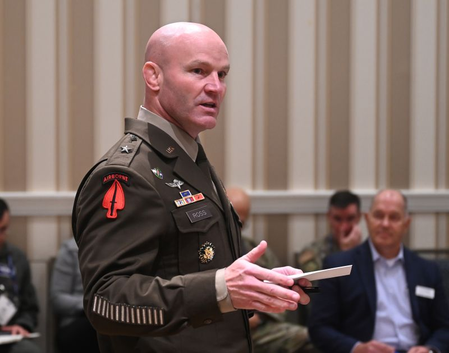
Brigadier General Matt Ross, director of Joint Interagency Task Force 401, said the systems would be placed at a military installation and operated and maintained by service members for 365 days.
The trial will examine whether directed-energy weapons can be used reliably without disrupting a base’s essential operations or interfering with its airspace.
“It’s a directed energy pilot,” Ross said during a media roundtable involving officials from the Army, Federal Bureau of Investigation and Department of Homeland Security.
“When we say directed energy, we use that term to be inclusive of all novel technologies, but what we’re really focused on right now is high-energy lasers and high-power microwaves,” he said.
Ross said tests had already demonstrated that both technologies could destroy or disable drones. The next challenge was determining how they would perform under operational conditions over a sustained period.
“We have a number of systems, and we’ve proven that the science works,” he said. “You can defeat a drone with both a high-energy laser and a high-power microwave. But we need to figure out how to use them successfully in an operational context.”
The pilot will assess power requirements, maintenance demands, operating costs and the number of days each system remains available for use.
Officials will also examine when specialised technical personnel are required to repair or support the weapons.
“I want to put those systems on an installation and have actual service members run them, operate them, and maintain them,” Ross said.
“I want to know what their power requirements are over a 365-day period. How many days are they operationally capable versus how many days do they require repair?” he said.
The findings will allow the military services to compare the cost and effectiveness of directed-energy systems with conventional methods of bringing down drones.
Ross said the military must also develop tactics, techniques and procedures that allow the weapons to operate without shutting down normal aviation activity around the installation.
“I don’t want to shut down the airspace as I use those systems,” he said.
Steve Willoughby, a Department of Homeland Security official, said drones had become valuable tools for public safety and government agencies but could also be exploited by malicious actors.
“Drones and the use of drones protect people, protect our assets, save lives, and really allow us to do more with less, which is critical in the current environment of government operations,” Willoughby said.
“On the counter side, it’s about how we enable the good while preventing the bad,” he added.
Willoughby cited the World Cup as an example of authorities managing authorised media, delivery and public-safety drones while imposing flight restrictions around stadiums, critical infrastructure and fan zones.
The task force works with federal, state and local agencies to protect military bases, recreation venues, public gatherings and critical infrastructure. Officials said its mission includes prevention, preparedness, drone detection, mitigation, explosives safety, forensics, intelligence and investigations.
The growing use of relatively inexpensive unmanned aircraft in Ukraine and other conflicts has accelerated international interest in counter-drone technology. Lasers can engage individual targets, while high-power microwave systems may disrupt the electronics of multiple drones.
–IANS
lkj/rs