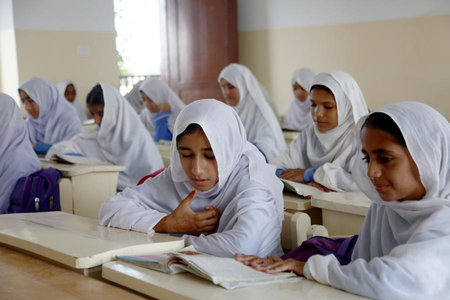
Islamabad, Sep 5 (IANS) Nearly 1.5 million internet-using children aged 12–17 across Pakistan experienced at least one form of technology-facilitated sexual exploitation and abuse in a single year — equivalent to roughly one in every 16 children, according to a new study.
The findings are from the latest report titled ‘Disrupting Harm in Pakistan: Evidence on Technology-Facilitated Child Sexual Exploitation and Abuse’, jointly conducted by the UNICEF Office of Strategy and Evidence — Innocenti, ECPAT International and INTERPOL, with funding from Safe Online.
According to UNICEF, the study was based on a nationally representative household survey of children aged 12-17 and their parents and caregivers, along with interviews with frontline and justice professionals. It also analysed relevant laws and policies to examine the scale and nature of technology-facilitated child sexual exploitation and abuse in Pakistan.
The research shed light on children’s experiences, the circumstances in which abuse can occur, and the barriers they may face in accessing help and protection.
The forms of abuse documented include “unwanted sexual images or conversations, requests to share images of private parts, the sharing of children’s images without their permission, threats or blackmail involving such images or sexual activity, and the use of artificial intelligence to create fake images or videos.”
“The digital world should be a safe space for children. We must shift from asking children simply to avoid risks to building stronger systems that prevent abuse and hold perpetrators and digital platforms accountable,” said UNICEF Representative in Pakistan, Pernille Ironside.
The report highlighted the extent to which technology-facilitated sexual exploitation and abuse remains hidden in Pakistan. It noted that more than half of children subjected to technology-facilitated sexual exploitation and abuse did not tell anyone, while none of the children surveyed reported to formal avenues, including helplines, social workers and police.
The findings identified community stigma, victim-blaming and a lack of trust in the police as key barriers that often prevent children and their families from speaking out.
Emphasising that “abuse is never a child’s fault”, the report underscored the need for safe, confidential and accessible avenues for children to seek help and support across Pakistan.
“The survey shows girls and boys in Pakistan have been subjected to technology-facilitated sexual exploitation and abuse at similar rates, but their experiences can differ significantly. For boys, stigma and expectations around masculinity can mean they are overlooked as victims and discouraged from speaking about what happened. Recognising and responding to boys’ unique experiences must be part of effective child protection,” Andrea Varrella, Head of Programme: Justice and Child Rights, ECPAT International.
UNICEF called for coordinated action across government, law enforcement, justice and social services, as well as communities, schools, families and digital platforms, to strengthen prevention, protection and response and create safer environments for children, online and in-person across Pakistan.
–IANS
scor/sd/