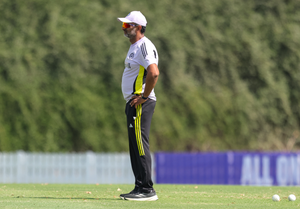
New Delhi, Aug 12 (IANS) Following a disappointing Women’s Premier League (WPL) 2026 campaign, where they managed just two victories in eight matches to finish at the bottom of the points table, UP Warriorz have kicked off their pre-season preparations with an ongoing four-day training camp at the serene-looking Sai Krishnan Grounds in Bengaluru ahead of the 2027 season.
The short camp is being helmed by head coach Abhishek Nayar, fielding coach Saurabh Bandekar, mentor Lisa Sthalekar, and newly appointed chief scout, former India spinner and chief selector Neetu David.
A key focus for UPW, if they are to excel in WPL 2027, will be fixing their unstable opening partnership, lack of batting contributions from Indian players, and inconsistent fielding. In an exclusive conversation with IANS, Nayar spoke on the objective of the ongoing camp, Neetu’s signing as chief selector, lessons from his first year as a head coach in women’s cricket, and more. Excerpts:-
Q. What are some of the primary objectives of this camp which have been ticked off, especially with the likes of Shikha Pandey, Asha Shobhana, G Trisha and Kiran Navgire in attendance?
A. I think part of it was that our goals were set at the end of last season, where we had a few discussions and gave our players giveaways on what we thought they could work on. So it’s more about tapping into that and seeing how much progress has been made. Then there’s also this thought process of having a trial, and we’ve got Neetu David on board.
The kind of players that she’s identified that we feel could make a difference to our setup this season – some young, good prospects – and this is more an opportunity for us to identify and understand which are those players.
One, who could make a difference, and two, for our own players, the kind of growth we’ve seen so that we can now give them something to take back and work on before the WPL. So they’re in a better position, if I could say that, to perform and give ourselves an opportunity in this tournament.
Q. With Neetu David joining as UPW’s chief scout, how has working alongside her helped accelerate your own understanding of the talent pipeline in women’s cricket across the country?
A. See, I’ve just met her and spent very little time with her, so it’s very hard for me to sort of say what I’ve learned so far. But what I can say is that when someone has been the fourth-highest wicket-taker in international women’s cricket for India, it just tells you the kind of experience she has of playing the game.
Her being in the system for so long provides a great opportunity for me over the next four or five days to gather as much information as I can, specifically to understand what sort of players and characters can step up and make a difference to our team.
So that is something that I’m really looking forward to. I’m very keen on picking her brains and just understanding from the different perspectives as to what we can do as a team and what I can do as a coach to impact these girls in WPL.
Q. What were the biggest lessons for you in coaching a women’s cricket team for the first time via this year’s WPL?
A. Well, I think a couple of things. Addressing a situation compared to men’s cricket – it’s slightly different for me. There are limitations in a lot of ways in the dressing room that you sometimes want to make sure that you can address in the camps, which is why camps like this are really important. When you come into a system, and you only get a week or 10 days, it’s very hard to sort of make an impact for anyone.
Then, using the whole year to have such camps where you’re constantly touching base with our players makes things easier. To be honest, from a coaching standpoint, when you look at women’s cricket, it’s exciting because they’re so eager to learn and take as much information on board as they can.
It’s very exciting because sometimes in men’s cricket, you have to be very picky and choosy about what you say because they’ve heard so much. In women’s cricket, you just know that everyone’s very hungry. You have players who are really, if I could say so, not only aspiring to do well, but motivated to make a name for themselves and to take Indian women’s cricket to another level.
It’s a very different feeling – it’s like working with cricketers who are really looking to grab those opportunities. So it’s fun, and I would say it’s challenging for me personally, because you work so much in men’s cricket, and when you come to women’s cricket, the questions sometimes are so different. It’s so much fun to work with them because it challenges you as well. It’s been a very interesting one for me. The field changes are obviously different. The mindset and planning are different. But all in all, I think it’s been thoroughly enjoyable for me.
Q. You had done camps with UPW and even commented on women’s cricket. What motivated you to be very involved in women’s cricket now that it’s becoming big in India?
A. Honestly, I wanted to challenge myself. I’ve done men’s cricket for a very long time, and after nine years with the IPL, I just felt that, from my individual standpoint, I wanted to challenge myself in a very different way. When this opportunity came my way, I obviously thought about it.
I felt I should give myself at least a 3–4 year buffer period just to understand if I can make an impact and if, in those years, I can learn all the things that people have done for so many years in women’s cricket. The difference is that when you’ve played men’s cricket, and you coach in it, it’s still relatively easier.
But when you’ve not played women’s cricket, and then you start watching women’s cricket, you still need time to understand tactically how you can help someone become better. Technically, everything remains the same. But in a marquee tournament like that, under pressure, how you can create an environment where people can actually embrace that pressure and do well.
So from that standpoint, it was more of a challenge for me. It was so enduring when I did those three-day, four-day camps for me, working with those cricketers. Because, like I said earlier, the enthusiasm and excitement to learn things and the energy of wanting to do more for me was, I think, truly enriching. So I really enjoyed that, and I just felt maybe, you know, give it a shot and see if we can help turn the fortunes of UP Warriorz. Not an easy task, but we’re trying our best to do that.
Q. From your observations so far, where do you see the quality of women’s domestic cricket heading in the next three to five years?
A. I think it’s been amazing. Just from last year’s trials and today, after watching the girls, I was just telling some of my support staff members that there’s so much difference between some of the girls, and it’s hard to recognise that these girls were the same ones we saw a year ago. There’s been so much growth, even in our setup, via the likes of Asha and Shikha.
Even now, we can see so much of an improvement in terms of fitness, trajectory, and pace. So it just tells you that, as I said before, the willingness to want to become better, the willingness to push themselves and get better, thanks to WPL, thanks to the exposure that all these girls are getting because of what they are trying to achieve as a team in the state leagues.
I just think in years to come, you’re going to see women’s cricket hit bigger sixes, hit more reverse sweeps, hit different areas, and bowlers are going to bowl with unique actions and bowl a lot quicker than they are now. So I feel Indian cricket is heading in a great space when it comes to women’s cricket, and you will see some really exciting talent going forward.
Q. After this camp in Bengaluru, are there any more preparatory camps in place for UP Warriorz, and how much do you stay in touch with players in the off-season?
A. I think we’ve stayed in touch. It’s a very individual thing. Anyway, in my coaching mantra, I love to do that. So we obviously keep touching base, and you give them a certain roadmap, and you keep following up and seeing what they’re doing because the other change in women’s cricket is now they play a lot of cricket and they’re constantly in camps, constantly playing matches.
So a lot of times the developmental phase that they normally would get has been reduced drastically. But you want to make sure you’re tapping in all the time and supporting them in whatever way you can.
I think UP Warriorz, in that regard, have been terrific through the years, even before I was associated with them. Kshemal Waingankar, who was the COO for a while, has always had this ideology of trying to make an impact for the player, even if it doesn’t benefit the team sometimes, but if it can benefit the player, then they go for it.
Then Jinisha Sharma, who’s our owner, has been terrific, and it’s wonderful for me to be part of a setup which is very similar to the ones in men’s cricket, which actually and really look after the individual growth of a player in the hope that it does help the team. But I think the larger goal is to make an impact in the lives of these players.
So the thought process is going to be simple. There will be follow-up camps and a lot of individual camps. Once the rain subsides in Mumbai, and whenever the girls are free, we’ll get them to Mumbai for short camps based on their schedule. But the idea is continuity and to have a support system for the girls whenever they require it.
–IANS
nr/bsk/