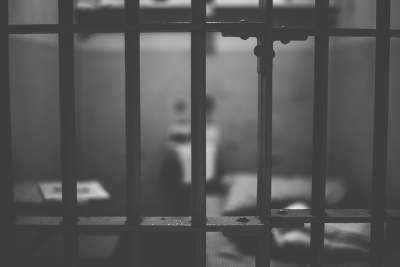
Islamabad, July 31 (IANS) Despite the introduction of Pakistan’s anti-torture law in 2022, torture and other forms of cruel, inhuman or degrading treatment continue to be reported in detention facilities across the country, the Human Rights Commission of Pakistan (HRCP) has said, citing poor implementation, weak safeguards and a persistent lack of accountability.
The observations were made during a roundtable as part of HRCP’s ‘Against Torture’ campaign, which brought together legal experts, government representatives and civil society organisations in Pakistan.
Expressing grave concern over the abuses, the HRCP Council member and former chairperson Hina Jilani said that “preventing and addressing other cruel, inhuman or degrading treatment or punishment—including psychological torture—was equally important, given that its consequences could be just as severe and long-lasting as physical torture.”
“Without clear procedures and practical guidance for law enforcement agencies on how to identify, investigate, document, and respond to cases of torture and ill treatment, the law cannot be implemented effectively,” she added.
Referring to the findings of the UN Committee against Torture (CAT), Pakistani lawyer Asad Jamal noted that many of the concerns it had raised in 2017, during Pakistan’s last review, were reiterated at the country’s recent review in 2026.
Earlier in May, the CAT expressed grave concerns over reports of “torture and ill-treatment and other forms of retaliation against human rights defenders, civil society activists, journalists, lawyers, political opponents, protesters and other critics of the government” across Pakistan.
This, Jamal said, demonstrated that the underlying structural problems that enabled the practice of torture to continue had yet to be addressed.
“Pakistan must establish clear protocols to prevent arbitrary detention, amend the Prison Rules in line with human rights principles and ensure that its legal and institutional framework complies with international standards,” he added.
Concluding the session, HRCP Council member Farhatullah Babar drew attention to the “use of internment centres” in Pakistan’s Khyber Pakhtunkhwa province, which he cautioned “should either be abolished or brought under the civilian prison system with independent civilian oversight”.
He also called on the Pakistani authorities to ratify the Optional Protocol to the Convention against Torture (OPCAT), which would allow a national preventive mechanism to conduct regular, unannounced inspections of all places of detention.
Last month, the HRCP wrote to Prime Minister Shehbaz Sharif, expressing grave concern over what it described as the widespread use of torture and other forms of cruel, inhuman and degrading treatment, both physical and psychological, in detention facilities across the country.
Marking the International Day in Support of Victims of Torture, in a letter addressed to Sharif, the HRCP said that Pakistan’s legal framework remains inadequate to prevent such acts.
The rights body warned that the absence of systematic monitoring and reporting has left the scale of torture and ill-treatment in detention facilities largely unknown to policymakers and inaccessible to civil society and international accountability mechanisms.
–IANS
scor/rs