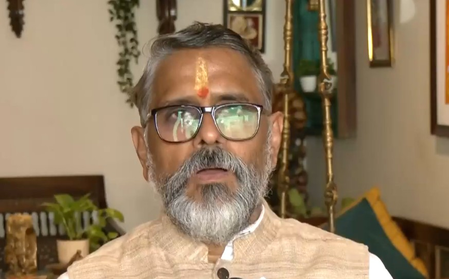
Mumbai, Aug 15 (IANS) Prime Minister Narendra Modi’s emphasis on strengthening the agriculture sector, promoting millets, harnessing artificial intelligence and developing the blue economy can open new avenues for India’s economic growth, according to CA Aditya Sesh, Member of the Expert Committee at the Ministry of Agriculture and Farmers Welfare, Government of India.
Reacting to the Prime Minister’s Independence Day speech, Sesh, in a conversation with IANS, said the groundwork laid by the government, including the signing of 35 Free Trade Agreements (FTAs), is a significant achievement and could provide Indian agricultural products greater access to international markets.
“Millets are one type of grain that we have used for generations. They consume less water, have high value and a longer shelf life. They can be consumed domestically as well as exported,” Sesh said.
He highlighted the nutritional and commercial potential of millets, saying they offer a low glycemic index along with proteins and essential nutrients. He added that millet-based products could also reduce India’s dependence on imports.
“You will be surprised to note that we import protein. Why should we do that? We have enough millets in our country to produce such products,” he said, pointing to the potential for developing cereal bars and other value-added food products.
Sesh said the rising acceptance of millets is already reflected in market prices, which, according to him, have increased by around 15 to 25 per cent this year.
Highlighting Maharashtra’s agricultural potential, Sesh said the state has diverse ecosystems, particularly in the Konkan region, which receives substantial rainfall. Maharashtra is also a major producer of food grains, vegetables and fruits, he said.
“Maharashtra has a big role to play in the overall agricultural progress of the country,” Sesh said, adding that the growing focus on Geographical Indication (GI) recognition for agricultural produce can help preserve product value and improve returns for farmers.
He also pointed to the One District One Product (ODOP) initiative, under which local agricultural and other products are being promoted, marketed and showcased.
Sesh also linked agricultural and economic security with energy security, saying recent global crises have demonstrated the need for India to develop multiple sources of energy.
“We must build multiple streams of energy so that we remain insulated from global shocks,” he said.
Supporting the use of ethanol-blended fuel, Sesh said E20 is a viable alternative and that vehicles compatible with E20 have been tested. He stressed the need to expand India’s energy portfolio by including hydrogen, solar, wind and nuclear energy.
“Every other source of energy that you think of must be in our portfolio so that we remain insulated from global shocks,” he said.
According to Sesh, increasing global competition and the possibility of supply-chain disruptions make energy diversification important for India’s sovereignty and security.
Sesh also welcomed the emphasis on emerging technologies such as artificial intelligence in agriculture. AI, he said, can become an important part of the agricultural ecosystem by improving productivity, decision-making and the efficiency of farming and supply chains.
He said the development of the blue economy, along with technology-driven agriculture, food processing and diversified energy sources, can contribute significantly to India’s growth in the coming years.
Sesh said India needs to focus on building a resilient agricultural and economic ecosystem that combines traditional strengths such as millets and farm produce with modern technology, global market access and value addition.
–IANS
brt/dan