Islamabad, Aug 15 (IANS) Pakistan’s “hard state” approach has fuelled insurgency, deepened political divisions and intensified instability across Balochistan and Khyber Pakhtunkhwa provinces while persistent protests in Pakistan-occupied Kashmir (PoK) further expose the depth of its internal turmoil which no amount of international goodwill can offset, a report has stated.
Pakistan’s credibility as a potential peace broker abroad will ultimately hinge on its ability to establish peace and political stability domestically. With economic growth projected at just 3.5 per cent in 2025–26, a USD 7 billion International Monetary Fund (IMF) relief package, and public debt standing at 68.5 per cent of its Gross Domestic Product (GDP), the country urgently needs genuine political leadership capable of addressing its internal conflicts and securing long-term political and economic stability, a report in the ‘International Centre for Peace Studies’ mentioned.
“Pakistan’s territorial units, Balochistan and Khyber Pakhtunkhwa, as also the illegally held Pakistan-occupied Kashmir (PoK), are grappling with political unrest, violent confrontations, and deepening alienation among their citizens. While the triggers for protest vary across regions, recurring themes include excessive centralisation by the federal government, entrenched economic inequality, and political marginalisation. In all these cases, the civilian government has abdicated its responsibility to resolve these conflicts politically, and welcomed the army by default to intervene and take control,” the report detailed.
According to the report, Pakistani armed forces portray such conflicts as either acts of sedition or mere law-and-order issues, while denying the political legitimacy of the protests and accusing demonstrators of acting as proxies for external powers. This deeply “securitised” response, it said, not only undermines prospects for resolving grievances through democratic channels but also perpetuates a cycle of mistrust, alienation and confrontation.
“In Balochistan, the sense of marginalisation and economic inequality has deepened over decades, resulting in calls for separation and independence and armed insurgency. Along with violent armed insurgent groups, civil society members of Balochistan have continually demanded greater political autonomy, rights, and control over their natural economic resources,” it mentioned.
The report noted that Balochistan and Khyber Pakhtunkhwa together accounted for 93 per cent of insurgent attacks in 2023, rising to 95 per cent in both 2024 and 2025.
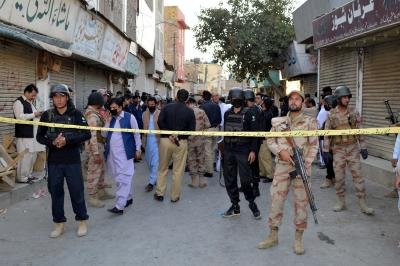
Citing the Pakistan Institute for Peace Studies (PIPS) annual security report, it said that attacks by Baloch insurgent groups increased sharply from 79 in 2022 to 110 in 2023, 202 in 2024 and 234 in 2025. Of the 435 insurgent attacks recorded in 2025, more than 65 per cent targeted Pakistan’s military and security personnel. The violence included suicide bombings and direct armed assaults carried out by groups such as the Balochistan Liberation Army (BLA), Balochistan Liberation Front (BLF), Balochistan Republic Guards (BRG) and Tehrik-e-Taliban Pakistan (TTP).
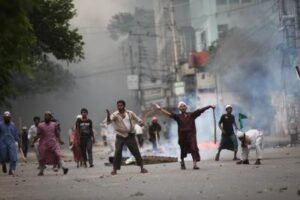
Highlighting the escalating unrest in PoK, the report noted that Pakistan’s ruling class has adopted the same tactical “hard state” approach towards political dissenters marked by “brutal crackdown and repression” that it has employed in Balochistan and Khyber Pakhtunkhwa.
–IANS
scor/ksk/as