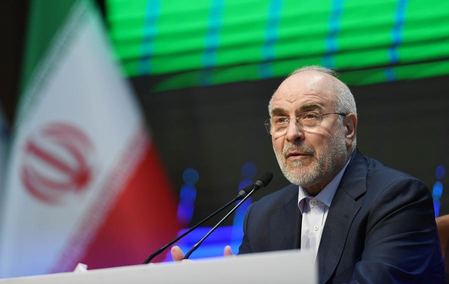
Tehran, April 19 (IANS) Iran has indicated that there has been “progress” in its ongoing discussions with the United States, though it stressed that a final agreement is still a long way off, with the current two-week ceasefire due to expire on April 22, according to local media reports on Sunday.
Mohammad Bagher Ghalibaf, Speaker of the Iranian Parliament, said in a televised address on Saturday (local time) that significant differences continue to persist between the two sides.
“There are many gaps and some fundamental points remain,” Ghalibaf said, underlining that negotiations have yet to reach a decisive stage.
“We are still far from the final discussion,” he added, signalling that while dialogue is ongoing, a comprehensive settlement has not yet been achieved.
Ghalibaf also asserted that Iran had maintained an upper hand during the recent weeks of conflict and suggested that Tehran agreed to the temporary ceasefire only after its conditions were acknowledged by Washington.
“If we accepted the ceasefire, it was because they accepted our demands,” he said, referring to the United States.
Emphasising Iran’s strategic position, he said the US had failed to accomplish its objectives, while Iran continued to exercise control over the crucial Strait of Hormuz, a key maritime route for global energy supplies.
“The enemy’s every effort was to impose its demands on us, and it is important that we register our rights, so this is where negotiation is a method of struggle,” Ghalibaf said.
Meanwhile, Iran’s Supreme National Security Council (SNSC) said that the country is determined to exercise control and supervision over traffic through the Strait of Hormuz until the war is definitively ended and a lasting peace is achieved in the region.
The statement, reported by Iranian media, came after Iran’s main military command, Khatam al-Anbiya Central Headquarters, announced earlier on Saturday the resumption of strict control over the Strait of Hormuz, citing the continuation of US naval blockade against Iran.
The SNSC said it will control the strait by demanding vessel information, issuing passage permits, charging fees for security and environmental services, and directing traffic according to its regulations and wartime protocols, Xinhua news agency reported.
–IANS
sd/