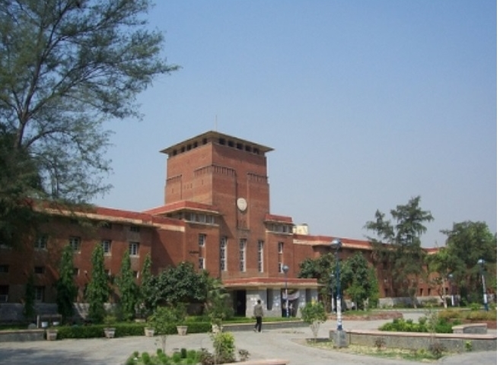
New Delhi, Sep 8 (IANS) The National Human Rights Commission (NHRC) has taken serious cognisance of the shortage of adequate and affordable hostel facilities for students of the University of Delhi (DU), and has directed the Delhi Chief Secretary and the University Grants Commission (UGC) Chairman to take necessary measures to augment hostel accommodation.
This comes against the backdrop of the tragic multi-storey building collapse in South Delhi’s Satya Niketan on Sunday, claiming seven lives and leaving several injured.
The building was operating as a boys’ PG, ‘Hostel Daze’. Hence, it is feared that among those trapped in the debris, most are students. Search and rescue operations are still ongoing to trace them.
According to the officials, the matter was taken up by the Commission in 2025 following a complaint filed by The Network for Access to Justice and Multidisciplinary Outreach Foundation. The complainant had highlighted that the University of Delhi has around 72,000 undergraduate students, while the availability of hostel accommodation remains highly inadequate in comparison with the student population.
According to the complaint, students who come to Delhi from other parts of the country often have to rely on expensive paying guest (PG) accommodation or privately rented premises because of the limited availability of university and college hostels, which places an additional financial burden on students and their families and can also adversely affect their education, living conditions and overall well-being.
The Commission said that it had treated the matter as an issue concerning the human rights of students and the need to ensure that access to higher education is supported by adequate residential facilities.
On September 30, 2025, the matter was considered by the NHRC Bench headed by Priyank Kanoongo, which sought an Action Taken Report (ATR) from the authorities concerned under Section 12 of the Protection of Human Rights Act, 1993.
However, as the requisite report was not received within the stipulated period, the Commission subsequently issued a reminder to the authorities concerned and granted additional time for furnishing the report. Following this, the response submitted by the DU was received and taken on record by the Commission.
In its response, the DU stated that its undergraduate programmes are offered through 65 constituent and affiliated colleges. The university also acknowledged the accommodation-related difficulties faced by students coming from outside Delhi and informed the Commission about the need for infrastructure improvement, including the creation of additional or new hostel facilities to address the requirement.
However, after examining the response, the Commission observed that the information furnished by the University of Delhi did not adequately address the core issue raised in the complaint.
The NHRC said that the response did not provide a clear assessment of the existing hostel capacity or the actual shortfall in accommodation, nor did it specify the additional capacity required to meet the needs of students.
The Commission further noted that the response lacked sufficient details regarding the requirement for new hostels, the financial responsibilities that would have to be undertaken by the concerned institutions and authorities, and a definite timeline for implementing measures to improve hostel accommodation.
The NHRC has now directed the Chief Secretary of Delhi, and the Chairman, UGC, to coordinate with the University of Delhi and submit a comprehensive, specific and action-oriented report outlining concrete measures to increase hostel accommodation for students.
It has made it clear that the proposed action plan should not be confined only to the construction of new hostels. It should also examine the possibilities of upgrading, expanding, renovating and augmenting existing hostel infrastructure, while simultaneously assessing the feasibility and actual requirement for setting up new or additional hostel facilities.
The Commission has also called for an assessment of hostel requirements at the level of individual colleges so that the accommodation gap can be properly identified and addressed.
The NHRC has directed the Delhi government and the UGC to submit the specific, consolidated and action-oriented report in coordination with the University of Delhi within four weeks. The Commission has fixed October 15 as the deadline for submission of the report.
“The proceedings, initiated last year in response to concerns regarding inadequate hostel facilities for Delhi University students, have now moved towards a concrete and time-bound institutional response. The Commission’s intervention seeks to ensure that access to higher education is not limited merely to securing admission, but is supported by adequate and affordable residential facilities for students as well,” officials said.
–IANS
sd/vd