Ahmedabad, Aug 8 (IANS) Families of Indian fishermen imprisoned in Pakistan, along with fishermen’s organisations, have urged the governments of India and Pakistan to release and repatriate those who have completed their sentences and whose nationality has been verified, with a specific appeal for their return home by August 15.
The appeal was made in a joint letter dated August 8 to the prime ministers of India and Pakistan by the Pakistan-India Peoples’ Forum for Peace and Democracy (PIPFPD), National Fishworkers Forum (NFF), Pakistan Fisherfolk Forum (PFF) and families of imprisoned fisherpeople.
The organisations said the occasion of the two countries’ Independence Days should be used to make a humanitarian gesture and bring back fishermen who have completed their sentences.
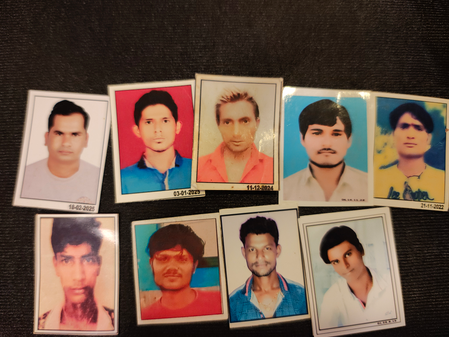
According to the latest figures cited by the organisations, 198 Indian fisherpeople remain imprisoned in Pakistan, while 53 Pakistani fisherpeople are in Indian prisons.
Of the Indian fishermen in Pakistan, 10 completed their sentences on July 16, 2021; 115 on March 16, 2022; 21 on November 17, 2022; 10 on January 31, 2023; and 22 on July 18, 2024.
The organisations said nationality verification in these cases had already been completed.
Jatin Desai, a journalist who has worked on the issue of fishermen imprisoned in Pakistan for around two decades, said there should be no technical difficulty in repatriating those whose sentences had ended and whose nationality had been established.
“There is some tradition, right? On 15th August, on releasing each other, sometimes on Eid,” Desai said, adding that he believed August 15 would be an appropriate occasion for the release of the fishermen.
“We have appealed, and everything is ready. So, if the Government of Pakistan today decides that we will release these people, there will not be any technical issue,” he told IANS.
Desai said both sides already knew which prisoners had completed their sentences. “They just have to write to our High Commission in Islamabad that we will be releasing these people on this day,” he said, adding that Indian officials could then make arrangements for their repatriation through the Wagah border.
He said the Indian government was pushing for the release and that he had personally interacted with officials of the Ministry of External Affairs and the Indian High Commission.
The issue, however, involves delays at several stages, according to Desai. Under the 2008 Agreement on Consular Access between India and Pakistan, consular access is to be provided within three months of an arrest. Still, he said this was rarely done within the stipulated period.
“There is no provision after Consular Access within what time nationality should be confirmed,” he said, arguing that a specific time limit should also be prescribed for nationality verification.
Desai said nationality verification should not ordinarily take a long time given the availability of identification records.
“Because nationality verification, you know, is a technical issue and, you know, because of Aadhaar and everything, it can be done in a couple of weeks to be very honest,” he said.
He suggested that a maximum period of three months could be prescribed for completing the process. The 2008 agreement itself provides for release and repatriation after the relevant conditions have been met.
Section 5 states: “Both Governments agree to release and repatriate persons within one month of confirmation of their national status and completion of sentences.”
Section 7 further allows either side, in special cases requiring compassionate and humanitarian consideration, to exercise discretion under its laws and regulations for early release and repatriation.
Desai said fishermen are generally charged under laws relating to passport violations and illegal entry, for which the maximum punishment is six months, but trials can take longer.
He said that after completion of a sentence, a person whose nationality has been confirmed should be released within a month.
“One should not use poor people as a pawn. That’s happening, that’s a tragic part,” he said. The joint appeal described the prolonged detention of fishermen as a “humanitarian issue”, saying many are poor and either illiterate or semi-literate workers who cross the maritime boundary inadvertently while pursuing their livelihoods.
The organisations said arrests of Indian fishermen by Pakistan had declined significantly over the past two years as fishermen had increasingly avoided going towards the International Maritime Boundary Line to fish.
They called for both countries to consider a “No Arrest Policy” for fishermen who inadvertently cross the maritime boundary.
Desai said the issue was different from fishing-related arrests involving Sri Lanka, Bangladesh and, to some extent, Iran because India’s relations with those countries were different from its relations with Pakistan.
“The number of Indian fishermen being arrested by Pakistan had fallen over the past two to three years as fishermen had become more aware of the consequences of crossing towards the maritime boundary,” he told IANS.
The joint letter also pointed to the impact of imprisonment on families. It said prolonged detention caused economic and emotional distress, leaving families without income and forcing wives or other relatives to work to support children.
He said the loss of income could also affect children’s education, particularly in rural families that had shifted their children to English-medium schools but could no longer afford the fees after the family’s earning member was arrested.
Families who travelled to Gujarat from coastal areas have also appealed for intervention.
One family member, Dhanjikantji Bamaniya, said her son Kapilkantji Bamaniya, 22, and Ramji Soma Savra, 50, had been detained in Pakistan for around five years.
She said the family had travelled from Kotra and had approached people in Gandhinagar and Surat through meetings and representations but felt that their pleas had not been heard.
“We appeal to the Government of India to try to get our people in Pakistan released. Bring our people back to us. We would be grateful,” she told IANS.
She said the family’s financial condition had become difficult because there was no earning member at home and that their daughter had also worked to support the household.
Another family member, Bhavna Solanki of Lerka village in Una taluka of Gir Somnath district, said her husband, Mahesh Solanki, 24, had been in a Pakistani jail since 2021.
She said she had learnt about the arrest two days after the boat failed to return.
“When they go out to sea, it takes about 15 days to reach the port. This time, 18 days had passed, so we thought that perhaps the wind had caused a delay of two days. But this time Pakistan directly caught the boat,” she said.
Solanki said she had two children, one studying in Class 6 and another aged five, while her father-in-law was bedridden. She now works as a daily-wage labourer and earns Rs 350 a day.
“At present, I go for daily-wage labour. I carry loads and bring them home. We are paid Rs 350 a day. That is how I run the household,” she said.
She said her younger son was only four months old when her husband was arrested and that she had raised him with support from people around her.
She also said she had not spoken to her husband in around six years and had received no letter or other communication. “We do not even know where he is in the world. We do not know whether he is alive or not,” she said.
Solanki said she and other families had previously met Gujarat leaders, including Jitu Vaghani and Parshotam Solanki, and had also met Deputy Chief Minister Harsh Sanghavi.
She said Sanghavi had assured them that efforts would be made to approach the relevant authorities and the High Commission to secure the fishermen’s release.
Desai said he had also met External Affairs Minister S Jaishankar last year and had continued to engage with officials on the issue.
He said the diplomatic environment had made the process more difficult, noting that both India and Pakistan currently have no High Commissioner in the other country and that the number of diplomatic staff on both sides had been reduced significantly.
“On some issues, I think we have issues with Pakistan, there is no doubt. But there are certain issues which are beyond all this,” he said.
The organisations said fishermen on both sides continued to face similar hardships.
They also cited the deaths of Indian fishermen in Pakistani custody, stating that an estimated four to five Indian fishermen die in Pakistani prisons every year and that an Indian fisherperson had died by suicide in prison in March last year.
The joint letter urged both governments to immediately release and repatriate all fishermen who had completed their sentences and whose nationality had been verified, implement the 2008 Consular Access Agreement “in letter and spirit”, fix accountability for continued detention in violation of the agreement and establish mechanisms to prevent such delays.
It also referred to the International Covenant on Civil and Political Rights, to which both India and Pakistan are parties, saying prolonged incarceration after completion of a sentence and nationality verification raised concerns regarding arbitrary deprivation of liberty.
–IANS
mys/dan