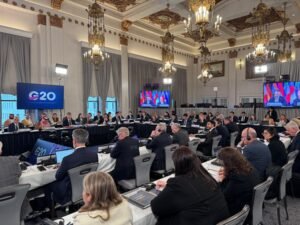
Milwaukee, Oct 1 (IANS) A senior Brazilian minister has called for urgent reform of the World Trade Organization (WTO) and universal rules governing global commerce, arguing that tariffs should not be used as instruments of coercion or discrimination.
Brazil’s Minister of Development, Industry, Trade and Services Márcio Elias Rosa said during an impromptu gaggle on the sidelines of the G20 Trade Ministers’ Meeting here on Wednesday (local time) that discussions had reinforced the need for an effective multilateral trading system.
Rosa said there was agreement on the need to revive the WTO and make it effective.
“There is consensus, for instance, that the WTO needs to be immediately reinvigorated, and that it should become effective,” he said through an interpreter.
The objective, he said, should be to establish rules that apply universally to economies rather than allow further fragmentation of international trade.
Rosa said the current state of the WTO made reform particularly important. Referring to Brazilian President Luiz Inacio Lula da Silva’s description of the organisation, he said it was “under critical condition”.
The minister said there was agreement in principle on the need for WTO reform, including from the United States. The next challenge was determining the terms of that reform.
“Just existing for existing. It’s not enough,” Rosa said.
He argued that the WTO should provide the framework for regulating international trade disputes.
“WTO should be enough to regulate trade,” Rosa said.
He then set out Brazil’s opposition to using tariffs for purposes beyond normal trade policy.
“Never have tariffs been used as a coercive or discriminatory tool,” he said through the interpreter.
Rosa said Brazil remained committed to negotiations and multilateralism even when it disagreed with trading partners.
“The Brazilian government is never away from the negotiation table for one reason. Because Brazil believes in multilateralism,” he said.
“We must work and create agreements. A space for Brazil to be defended. It is at the negotiation table,” he added.
At the G20 meeting, trade ministers also discussed food security and global food supplies. Rosa said participants had moved towards common ground on the issue, although other subjects, including excess industrial capacity, remained under discussion.
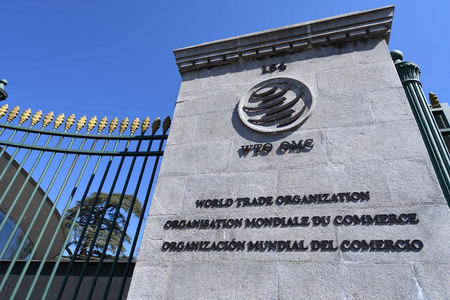
The WTO, established in 1995, provides the principal multilateral framework for global trade rules and dispute settlement. Its members have for years debated reforms covering dispute settlement, negotiating functions and the organisation’s ability to respond to changing patterns of global commerce.
The G20 brings together major developed and emerging economies, including India, Brazil and the United States. Trade tensions, industrial overcapacity, food security and the future of multilateral trade rules have increasingly featured in discussions among its members.
–IANS
lkj/sd/