New York, Sep 23 (IANS) US-based advocacy group Human Rights Watch (HRW) said that three laws approved by Bangladesh’s Parliament in September this year have undermined human rights protections and broken the ruling Bangladesh Nationalist Party’s (BNP) commitments to reform.
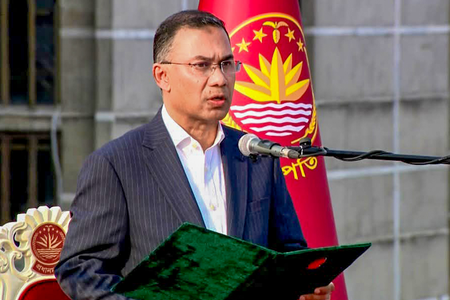
According to HRW, after winning the election, the Prime Minister Tarique Rahman-led BNP government has now legislated to strip the country’s National Human Rights Commission (NHRC) of its independence and weaken its investigative powers.
The rights body said that the third law, which purports to abolish the paramilitary Rapid Action Battalion (RAB), a law enforcement agency responsible for extrajudicial killings, enforced disappearances, and torture in Bangladesh, instead effectively renames the force while providing fewer safeguards than those applicable to the regular police.
Earlier on September 10, Bangladesh’s parliament passed the Special Response Battalion Act, renaming the RAB. The new law transfers the battalion’s personnel, powers, and property, including records, to a supposedly new force, the Special Response Battalion (SRB), which began operating on September 16. Even the logo remains the same, only changing the letters RAB to SRB, the HRW noted.
Expressing grave concern, Elaine Pearson, Asia Director at HRW, said: “The new government’s efforts to shield security forces from scrutiny and accountability offer no reason to trust that killings and disappearances will remain a thing of the past.”
HRW noted that one of the laws, passed on September 6 following a walkout by opposition legislators, does not allow the NHRC to directly investigate alleged rights violations by security forces.
Under the legislation, the commission can only request a report from the agency facing the allegation. However, a “vaguely worded provision” seems to allow the NHRC to launch its own inquiries if that agency fails to respond, or its report is deemed unsatisfactory, HRW mentioned.
Raising alarm, the rights body said that the new law also restores government control of the appointments process, reduces the NHRC’s budgetary and administrative independence, and downgrades the status and independence of the National Preventive Mechanism.
HRW called on Bangladesh’s international partners, including the European Union and the United Kingdom, to strongly express their concern over the emerging human rights record and policies of Bangladesh’s new government.
–IANS
scor/vd