New Delhi, Oct 13 (IANS) Delhi Assembly Speaker Vijender Gupta said on Tuesday that everyone should reflect upon Kashmir before and after 2019 so that people can understand the significance of the changes that have taken place under the leadership of Prime Minister Narendra Modi.
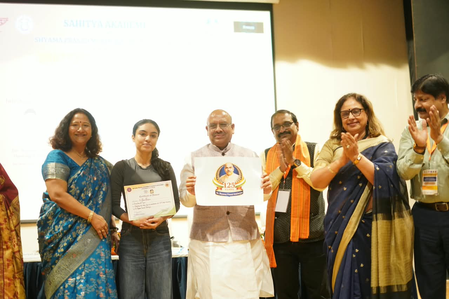
Addressing the inaugural session of a two-day seminar commemorating the 125th Birth Anniversary of Syama Prasad Mookerjee at Delhi University’s Shyama Prasad Mukherji College for Women, Gupta referred to the constitutional changes introduced in Kashmir in August 2019 under the leadership of PM Modi with Union Home Minister Amit Shah steering the Parliamentary process.
The Delhi Assembly Speaker described the Centre’s decision as the culmination of a struggle initiated more than six decades earlier.
He emphasised that the significance of these developments must be understood through a careful comparison of Jammu and Kashmir before and after 2019, examining the changes in governance, development, public institutions and opportunities available to people.
Such an assessment, he said, must be informed by historical understanding and verifiable evidence rather than political assumptions.
“The younger generation, in particular, must be acquainted with the circumstances in which Mookerjee pursued his convictions and the larger constitutional questions surrounding the movement,” Gupta added.
He recalled Mookerjee’s lifelong struggle for national integration and described the effective abrogation of Article 370 in 2019 as the fulfilment of an aspiration that had shaped his political movement in 1952–53.
The seminar, organised by Sahitya Akademi in association with Shyama Prasad Mukherji College for Women, is being held under the theme “Intellectual Legacy, National Vision and the Journey towards Viksit Bharat”, bringing renewed attention to the relationship between Mookerjee’s political convictions, intellectual contributions and India’s contemporary national aspirations.
The inaugural ceremony was attended by Varun Gulati, Sahitya Akademi Secretary; K.G. Suresh, India Habitat Centre Director; and Balaram Pani, Delhi University’s Dean of Colleges.
The conference brought together academicians, scholars and students for deliberations on Mookerjee’s intellectual legacy, his contribution to India’s political development and the continuing relevance of his ideas to the country’s future.
The Delhi Assembly Speaker said that Mookerjee’s legacy extended beyond politics to education and institution-building.
“A distinguished educationist and former Vice-Chancellor of the University of Calcutta, Mookerjee regarded scholarship and institutional excellence as foundations of nation-building.”
The Delhi Assembly Speaker emphasised that universities must foster independent inquiry, informed debate and critical engagement with history and contemporary challenges.
He said that the vision of ‘Viksit Bharat’ must transcend economic growth and technological advancement to encompass educational excellence, scientific research, institutional accountability and equitable opportunities.
–IANS
rch/khz