New Delhi, June 4 (IANS) NHRC Chairperson Justice V. Ramasubramanian called for stricter regulation of construction around water bodies while leading discussions on the impact of heat wave in urban areas, an official said on Thursday.
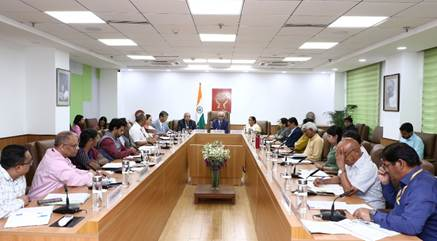
Speaking at an event organised by the National Human Rights Commission’s (NHRC) Core Group on Environment and Climate on the topic ‘Heat Wave and its Mitigation in Urban Areas’, Justice Ramasubramanian emphasised the need for stronger protection of existing natural ecosystems and actionable recommendations focused on sustainable urban development.
One of the key suggestions made at the event was to improve heat wave mortality and morbidity surveillance through a unified, scientifically validated reporting and data management system, according to a statement.
Another participant stressed the need to institutionalise Heat Action Plans and their implementation across all states, districts, and cities through dedicated Heat Officers, integrated governance dashboards, regular monitoring, and inter-departmental coordination.
Justice Ramasubramanian said that the destruction of water bodies and forests is the primary cause of increasing heat stress, advocating for stronger protection of existing natural ecosystems, stricter regulation of construction around water bodies, and actionable recommendations focused on sustainable urban development.
He said that there has been a recurring annual discourse on pollution in winter and heat waves in summer for some time now, without any visible effects of the mitigation efforts to protect human life from the impact of these crises.
Aakash Shrivastava, Additional Director, Ministry of Health and Family Welfare, cautioned that heat-related health risks are projected to rise significantly by 2035 and called for expanded Heat Health Action Plans, stronger surveillance systems, greater healthcare capacity, wider training of medical personnel, and improved hospital preparedness to reduce fatalities.
NHRC Member Justice Bidyut Ranjan Sarangi said that there is a need to balance urban development with environmental protection, urging collective action to conserve nature, expand green areas, and safeguard resources for future generations.
NHRC Secretary General Bharat Lal, in his opening remarks at the hybrid event held at Manav Adhikar Bhavan, highlighted the background for convening the Core Group on Environment and Climate.
He said heat waves are a growing human rights concern linked to environmental degradation and climate change.
Lal said that its impact is greater on vulnerable groups, including construction workers, outdoor labourers, gig workers, the elderly, pregnant women, and those without adequate housing or access to cooling facilities.
He said that heat waves are becoming an increasingly acute challenge in urban areas and expressed concern over the rising number of heat-related deaths across the country in recent years.
N.H. Ravindranath, former professor at the Centre for Sustainable Technology, Indian Institute of Science, Bengaluru, called for a broader heat wave definition that incorporates humidity, vegetation, and land-surface factors, alongside ward-level forecasting, AI-driven vulnerability mapping, stronger heat action plans, dedicated heat officers, and protection for vulnerable workers.
Rajneesh Sareen, Programme Director, Sustainable Building & Habitat Programme, CSE, called for worker-centric heat safety protocols, expanded city-level temperature observatories, distributed green and blue infrastructure, and performance-based standards to reduce urban heat and improve climate resilience.
–IANS
rch/dan