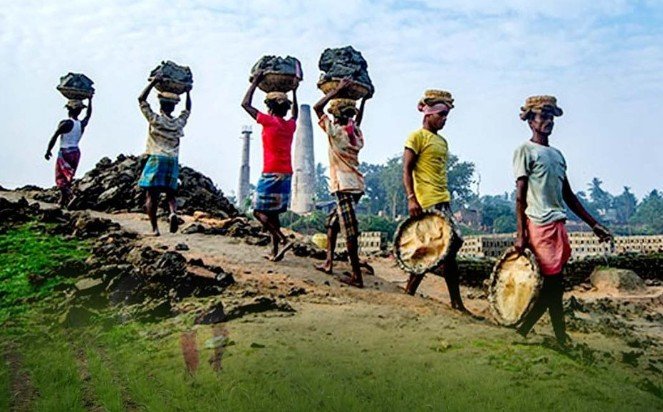
New Delhi: India’s rural development model has steadily evolved through a series of landmark welfare and employment programmes over the decades. From Maharashtra’s Employment Guarantee Scheme to the Swarnajayanti Gram Swarozgar Yojana and later the Mahatma Gandhi National Rural Employment Guarantee Act (MGNREGA), each initiative reflected the socio-economic priorities of its time.
The newly enacted Viksit Bharat–Guarantee for Rozgar and Ajeevika Mission (Gramin) Act, 2025 — popularly referred to as VB-G RAM G — marks the next stage in that evolution. Rather than replacing earlier rural employment programmes, the legislation seeks to expand their scope by combining livelihood protection with long-term rural economic development.
At the centre of the new framework is a major shift in approach. Earlier employment schemes primarily functioned as safety nets aimed at addressing distress and seasonal unemployment. While the new Act retains the legal guarantee of employment, it also seeks to ensure that public spending creates durable and productive rural assets capable of strengthening village economies over time.
Under the legislation, the statutory employment guarantee has been increased from 100 to 125 days, providing additional livelihood support to rural households. The framework also preserves core worker protections such as unemployment allowance, timely wage payments, direct benefit transfers, and social audit mechanisms. Existing job card holders are expected to transition into the new system without disruption.
Policy experts view the Act as an attempt to align rural development priorities with changing economic realities. Rural India today is significantly different from the landscape that existed when MGNREGA was introduced in 2005. Improvements in connectivity, banking access, digital infrastructure, and welfare delivery systems have altered both opportunities and expectations in villages. Employment generation alone is increasingly seen as insufficient without parallel investments in productivity, climate resilience, and local enterprise development.
A key feature of the VB-G RAM G framework is its emphasis on asset creation across four major sectors — water security, rural infrastructure, livelihood infrastructure, and climate resilience. Planned works include irrigation systems, storage facilities, fisheries infrastructure, renewable energy assets, sanitation projects, agro-processing units, flood protection structures, and rural market connectivity.
Supporters of the legislation argue that such investments could generate long-term multiplier effects across agriculture and allied sectors. Improved irrigation and water conservation can boost farm productivity, while storage and processing facilities may help reduce post-harvest losses and create local employment opportunities. Enhanced connectivity and rural market infrastructure could further strengthen access to consumers and supply chains.
Another significant aspect of the Act is its convergence-based planning model through Viksit Gram Panchayat Plans. Under this system, Gram Panchayats will prepare integrated development plans linked with multiple Central and State government schemes. The “single-plan, multi-funding” approach aims to reduce fragmented spending and promote coordinated rural development at the village level.
The legislation also introduces stronger technology-driven governance mechanisms. Geo-tagging of assets, biometric attendance systems, digital dashboards, public disclosure platforms, and expanded social audits are intended to improve transparency and accountability in implementation. The administrative expenditure cap has also been increased from 6 percent to 9 percent to strengthen local execution capacity.
Analysts say the broader significance of the VB-G RAM G Act lies in its attempt to bridge welfare and economic transformation. While earlier employment programmes focused primarily on poverty alleviation, the new framework seeks to address structural challenges by building resilient infrastructure and strengthening rural economic ecosystems.
As India moves toward its Viksit Bharat @2047 vision, the legislation is being viewed as an effort to reposition rural employment spending from short-term consumption support to long-term public investment. In that sense, VB-G RAM G represents not a break from past rural employment policies, but an expansion of their developmental ambition — shifting the focus from guaranteed work alone to sustained rural prosperity.